Ethnic Minorities in Democratizing Muslim Countries by Maurizio Geri
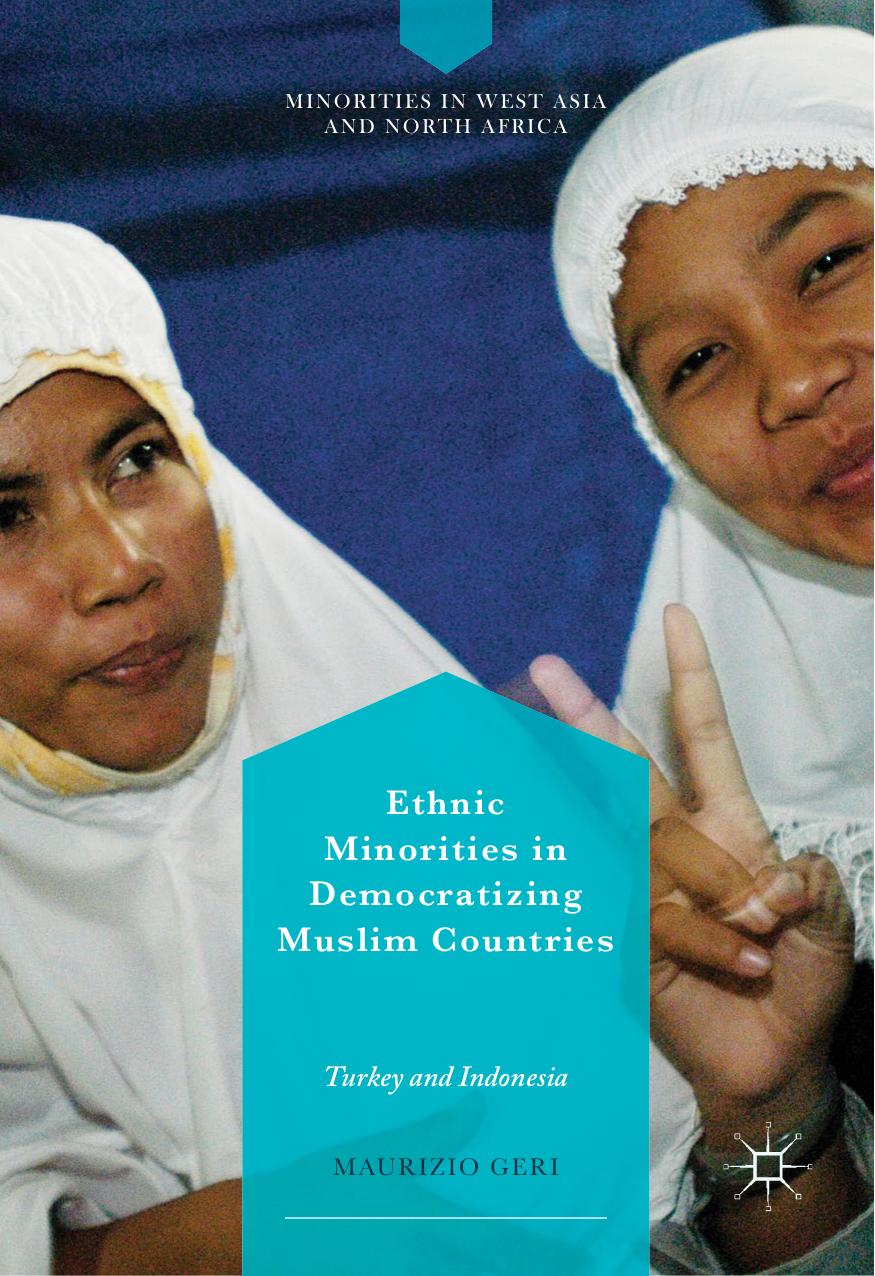
Author:Maurizio Geri
Language: eng
Format: epub, pdf
Publisher: Springer International Publishing, Cham
Theories Applied to Case Studies
Scholars of ethno-nationalist theories11 affirm that elites often promote exclusive nationalist policies once they fear the loss of power, and so it is the elite interest that could determine a state’s approach to ethnic minorities . Snyder in particular argued that the transition to democracy often brings with it ethnic conflict because of nationalism supported by the elites to gain in the popular ballot, especially when there are no preconditions like an adaptable ruling elite or institutions such as the rule of law and a free press. Again, the hypothesis emerging from this theory is that new elites in power, and by extension the shift of power among elites during a democratic transition, could change the state’s approach to minorities based on the power calculation among new elites.
Therefore, to understand elites’ fear of accommodating minorities or oppositions, it is also important to analyze the democratization processes in addition to the new democracy itself. Following the argument of Cesari,12 there are three main ways to deal with old elites during a transition to democracy: make a tabula rasa of the old regime and start from scratch, marginalize the actors of the former regime, or erode the former regime from within. Among Muslim-majority countries, the first path was followed by the Islamic revolution in Iran and the post-Saddam Hussein era in Iraq. While the first resulted in a theocracy, the second failed completely in its democratization , precisely because of a lack of inclusiveness of the old regime and system (besides the disasters of the American war). The second path was followed by Turkey, with the AKP in power since 2002, building alliances among the excluded forces in order to marginalize the old regime and gradually excluding the old Kemalist–military elites. This path seemed to bear more democratic fruit, at least regarding the stability of Turkish democracy, until the failed coup of July 2016. However, the internal problems of a sizeable liberal democracy and of the relationship with the Kurdish minority reveal the limits of this marginalization of the old regime. This could indicate that these forces reacted to their loss of power by revitalizing strong nationalist sentiments, something very much related to the terrorist attacks and repression of the Kurdish minority in the Eastern region. Finally, the third type seems to be the model followed by Indonesia following democratization in 1998, with a gradualism that democratized the structures but retained the old political cadres for a while, gradually excluding them from political and economic power, until finally the transition was completed with the first new president not belonging to the old establishment, Joko Widodo, being elected in 2014. This path seemed to work better in the long term regarding the inclusion of minorities, at least judging from Indonesia today.
Rather than examining established elites, other scholars attach importance to the actions of the leadership for the solution of separatist conflicts. Regarding the Indonesian case, for example, Miller argues that “agency, or political will, was the most crucial factor in the resolution of the Aceh conflict, supported by structural preconditions and circumstances.
Download
Ethnic Minorities in Democratizing Muslim Countries by Maurizio Geri.pdf
This site does not store any files on its server. We only index and link to content provided by other sites. Please contact the content providers to delete copyright contents if any and email us, we'll remove relevant links or contents immediately.
| Africa | Americas |
| Arctic & Antarctica | Asia |
| Australia & Oceania | Europe |
| Middle East | Russia |
| United States | World |
| Ancient Civilizations | Military |
| Historical Study & Educational Resources |
Cecilia; Or, Memoirs of an Heiress — Volume 1 by Fanny Burney(32562)
Cecilia; Or, Memoirs of an Heiress — Volume 2 by Fanny Burney(31959)
Cecilia; Or, Memoirs of an Heiress — Volume 3 by Fanny Burney(31945)
The Secret History by Donna Tartt(19103)
Sapiens: A Brief History of Humankind by Yuval Noah Harari(14393)
Leonardo da Vinci by Walter Isaacson(13341)
The Radium Girls by Kate Moore(12036)
Sapiens by Yuval Noah Harari(5375)
How Democracies Die by Steven Levitsky & Daniel Ziblatt(5225)
The Wind in My Hair by Masih Alinejad(5103)
Homo Deus: A Brief History of Tomorrow by Yuval Noah Harari(4923)
Endurance: Shackleton's Incredible Voyage by Alfred Lansing(4790)
Man's Search for Meaning by Viktor Frankl(4612)
The Silk Roads by Peter Frankopan(4538)
Millionaire: The Philanderer, Gambler, and Duelist Who Invented Modern Finance by Janet Gleeson(4482)
The Rape of Nanking by Iris Chang(4224)
Joan of Arc by Mary Gordon(4117)
The Motorcycle Diaries by Ernesto Che Guevara(4106)
Stalin by Stephen Kotkin(3973)
